The Robert and Ina Caro Travel & Research Fellowship
A minimum of $2,500 for travel to help research a biographical work
About the Award
“If the place, the setting, played a crucial role in shaping the character’s feelings, drives, motivations, insecurities, then by describing the place well enough, the author will have succeeded in bringing the reader closer to an understanding of the character.” –Robert Caro
In honor of the work of Robert and Ina Caro, Biographers International Organization has set up an annual travel and research fellowship. Biographers with a work in progress can apply to receive funding for research trips to important settings in their subjects’ lives or to archives. This fellowship is a reflection of BIO’s ongoing commitment to support authors in writing beautifully contextualized and tenaciously researched biographies. BIO will award up to four winners with a minimum award of $2,500 each. Awards are presented at the annual BIO conference.
By their own example, Robert and Ina Caro have taught us the crucial importance of depicting a sense of place in delineating character. “The greatest of books,” Robert Caro said in his keynote speech at the 2011 BIO Conference in Washington, “are books with places you can see in your mind’s eye.” He cited these examples of great writing about setting:
- The deck of the Pequod, in Moby Dick, when the sailors haul whale parts aboard the ship to melt down for oil.
- The battlefield at Borodino, in War and Peace, as Napoleon looks down from a hill and has to decide whether to send his Old Guard forward into battle.
- Miss Havisham’s room in Great Expectations, with the wedding cake covered with cobwebs, in which she lived out her life after she was jilted.
How to Apply
The Caro Fellowship is open to all biographers anywhere in the world who are writing in English and whose work requires travel to a particular place significant to the life of the biographical subject and/or a particular archive. The fellowship is restricted to support works of biography, e.g., not of history, autobiography, or memoir. BIO welcomes submissions for non-print biographies such as documentary films. A publishing contract is not required for eligibility.
Complete the online entry form.
Upload the following submission materials in one single PDF document:
- Project description (up to 500 words). Provide a synopsis of the biography and explain how this work fits into the mission of the Caro Fellowship. Provide details of where you wish to travel and why, and explain how such travel is relevant to your project. If you wish to travel to places where your subject lived or worked, provide relevant details. If you wish to travel to particular archives, specify why they will be important for your biography.
- Details of your proposed budget. Provide an estimated cost of travel and possible housing.
- Anticipated result of receipt of a Caro Fellowship. Explain whether the fellowship will lead to completion of a proposal, a chapter in your biography, or completion of the work.
- Author bio (up to 500 words).
Your document should be double-spaced, with 12-point type and standard margins. The document must be a PDF. Please be sure to include your first and last name as part of the file name of the PDF that you submit.
Sign the online entry form by checking the box affirming your understanding of the rules and procedures.
There is no application fee for this fellowship.
You will receive an acknowledgment of your entry within several days. If you do not, please contact BIO’s awards administrator.
The deadline for entries is February 1. Receipt of all applications will be acknowledged by email. The fellowship winner will be announced by early May. Formal announcement of the winner will be made at the annual BIO conference.
In submitting this prize entry form, you agree to all the terms and conditions of the BIO Caro Fellowship. You also affirm that the work you are submitting is in progress and will not be in production at the time of the annual BIO conference. Only one entry per applicant is allowed. In submitting this entry form, you affirm that you are the sole author (or, if co-authored, authors) of the work being submitted. In the event that you are the winner, you affirm that you will make your best effort to publish your work, and that you will acknowledge the support of BIO’s Caro Fellowship in any publications resulting from the fellowship. BIO also requires that you submit a brief paragraph reporting on your progress upon completion of your funded travel. All decisions by the judges are final.
Question: Does memoir qualify?
Answer: No, it does not.
Question: Do I have to be a member of BIO when I apply?
Answer: No, you do not, but we would be pleased if you joined.
Question: Are biographies for young adults eligible?
Answer: Yes, they are.
Question: Am I eligible if I am represented by an agent or if my biography is under contract for publication?
Answer: Yes.
Question: Am I eligible for more than one BIO fellowship in a given year?
Answer: Yes.
Question: Will I receive feedback on my submission?
Answer: Due to the number of submissions we receive, we are unable to provide written or verbal feedback on applications.
Winners

2025
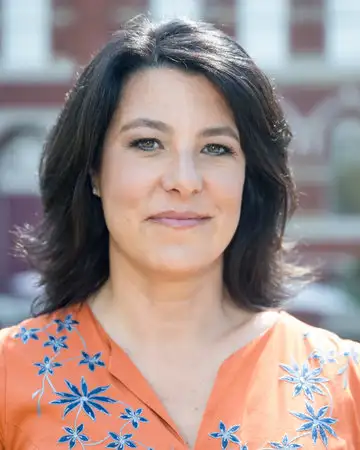
Mary Chapman
Mary Chapman is writing Go-Away Girls: How an Enslaved Chinese Child Acrobat Inspired Her Daughter, Sui Sin Far, and Asian American Literature, a dual biography of Edith Eaton and her mother.
2025
Rebecca Roberts
Roberts is writing a book about Rose Cleveland, sister of Grover Cleveland, acting First Lady from 1885-1886, and “America’s first gay First Lady.”
2024
Krithika Varagur, Keri Walsh
Varagur is writing a group biography, The Singh Princesses: Three Sisters at the End of Empire. Walsh is working on Shakespeare and Company: The Paris Bookstore that Changed the World, a dual biography of the bookstore’s proprietors, Sylvia Beach and George Whitman.
2023
Daniel Brook, Kate Culkin, Lizzie Skurnick
Brook, a journalist and author, is working on a biography of German physician and sexologist Magnus Hirschfeld. Culkin is a professor of history at Bronx Community College. Her research focuses on nineteenth-century American women, memorialization, and the role of eportfolio in teaching and learning. She is currently working on Thankful for My Sisters: Ellen Tucker Emerson, Edith Emerson Forbes, and the Emerson Legacy. Skurnick is a writer, critic, and editor. She is currently at work on The Special Students: My Great-Grandfather at Harvard, His Mysterious Death, and the Rise of the Talented Tenth.
2022
Lauren Arrington, Bill Goldstein
2021
Humera Afridi, Iris Jamahl Dunkle
2020
Lynne Bermont, Lance Richardson
2019
Nicholas Boggs, Amy Reading
2018