Kitty Kelley Dissertation Fellowship in Biography
$25,000 to a Doctoral Student Writing a Nonfiction Dissertation on the Life of One or More Individuals
About the Award
Biographers International Organization (BIO) invites applications for the Kitty Kelley Dissertation Fellowship in Biography. The fellowship provides $25,000 to a doctoral student in any department who is writing a dissertation in English focused upon the life of another person or upon the lives of two or more individuals. It cannot be fictionalized nor should the focus be primarily autobiographical. It need not cover the entire life of its subject or subjects. The fellowship is endowed by Kitty Kelley, a founding member of BIO, the author of seven best-selling biographies, and a long-time advocate for biography and biographers.
The purpose of the Kitty Kelley Dissertation Fellowship in Biography is to provide financial support so that a doctoral candidate may devote a year to completing a dissertation in the field of biography. A fellow is expected to pursue the dissertation project on a full-time basis during the funding period.

How to Apply
Applicants must have completed all course work, passed all preliminary examinations and received approval for a dissertation proposal. Students who have already received a dissertation fellowship are not eligible. The fellowship is open to students in all fields, provided that the dissertation is biographical in its methods and focus.
The application period opens September 1 and closes February 15. The winner will be announced no later than May 1, with funding to be used for the upcoming academic year.
Selection Criteria and Review Process
A review committee of published BIO-member biographers will evaluate applications using the following criteria:
- Scholarly significance of the proposed biography
- Caliber of the applicant’s writing
- Qualifications of the applicant
- Feasibility of the project and proposed schedule
BIO does not provide feedback to the applicants nor reconsider applications once a decision has been announced. Unsuccessful applicants may reapply in the future.
Application Components
- Narrative description of dissertation topic, no more than 1,000 words
- Writing sample, ideally part of a dissertation chapter, not to exceed 15 double-spaced pages
- Applicant’s background in the form of a CV, no more than 3 single-spaced pages
- Projected timeline for completion of the dissertation
- Transcript of graduate coursework
- Recommendation from the applicant’s dissertation advisor, written on university letterhead. The advisor must verify acceptance of the dissertation proposal and submit the letter by email directly to BIO’s Executive Director. The subject line should read “BIO Kitty Kelley Fellowship” followed by the applicant’s last name.
The entire application (A-E) should be submitted as a single PDF file. The adviser’s recommendation (F) should be sent separately. The PDF document should be titled “Kitty Kelley Fellowship,” followed by the applicant’s last name.
The application should be formatted with one-inch margins on 8.5 x 11-inch (letter-size) paper. Each component should be clearly delineated, with page breaks between separate components.
Applicant components (A-E) should be submitted via this form by February 15. The adviser’s letter should be emailed no more than two weeks after this date.
The fellowship recipient must notify BIO of acceptance by May 15 and inform BIO of any significant changes to plans during the fellowship year. At the year’s end, the recipient must submit a report detailing the dissertation’s current status and progress. Questions regarding income tax matters should be directed to a financial advisor or the IRS, as BIO cannot provide tax advice.
Winners
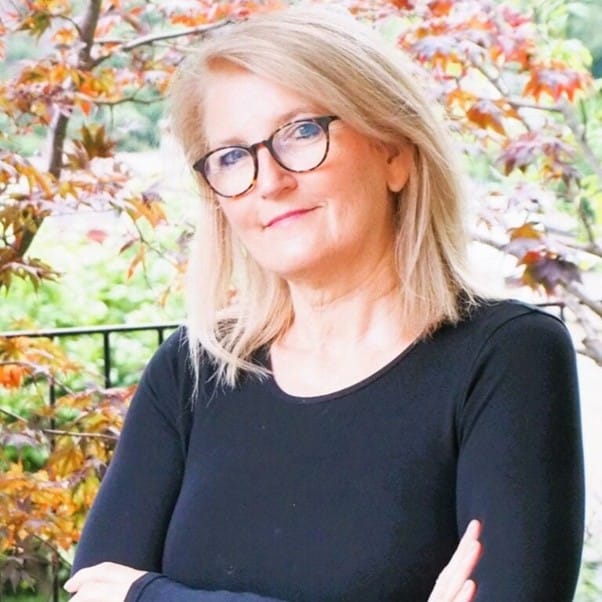
2025
Valerie Waterhouse
For her research on Malachi Whitaker (1895–1976), a British working-class writer known for her short stories and memoir.
Valerie Waterhouse has been named the recipient of the inaugural Kitty Kelley Dissertation Fellowship for her research on Malachi Whitaker (1895–1976), a British working-class writer known for her short stories and memoir.
The $25,000 fellowship is awarded to a doctoral student in any department who is writing a dissertation in English that focuses on the life of another person or persons. It is endowed by Kitty Kelley, a founding member of BIO, the author of seven best-selling biographies, and a long-time advocate for biography and biographers.
“Being chosen by a committee of published biographers as the inaugural winner of the Kitty Kelley Dissertation Fellowship is a game-changer for me,” said Waterhouse. “Writing the first biography of any subject involves long, isolated hours in archives, libraries, on research trips, and in one’s own head. This prestigious affirmation gives me the confidence and support I need to continue and complete my work. Malachi Whitaker was a literary author writing stories about northern working-class people at the time of Virginia Woolf’s upper-class Bloomsbury. Her work fills a gap in English literary history. Thank you, Kitty Kelley, and BIO, for helping to bring attention to her life and work.”
“The fellowship selection committee was pleased with the pool of applicants for its inaugural fellowship and was doubly pleased to find within that pool a true biography, one that makes the case for reconsidering an overlooked woman writer,” said Linda Leavell, chair of the committee. “Valerie Waterhouse’s writing sample shows that she has learned well the art of creating narrative out of serious scholarship. We congratulate Ms. Waterhouse on her promising project and also the University of Salford for accepting biography as a creative writing dissertation.”
The selection committee was composed of Linda Leavell, Heather Clark, and Carla Kaplan.Fara Dabhoiwala won for his project, Black Genius: In Search of Francis Williams, which explores the life of an Enlightenment-era polymath born to enslaved African parents in Jamaica at the close of the 17th century. Educated as a free man in England, Williams later returned to Jamaica, where, as a well-positioned figure, he established a school for free Black children.